
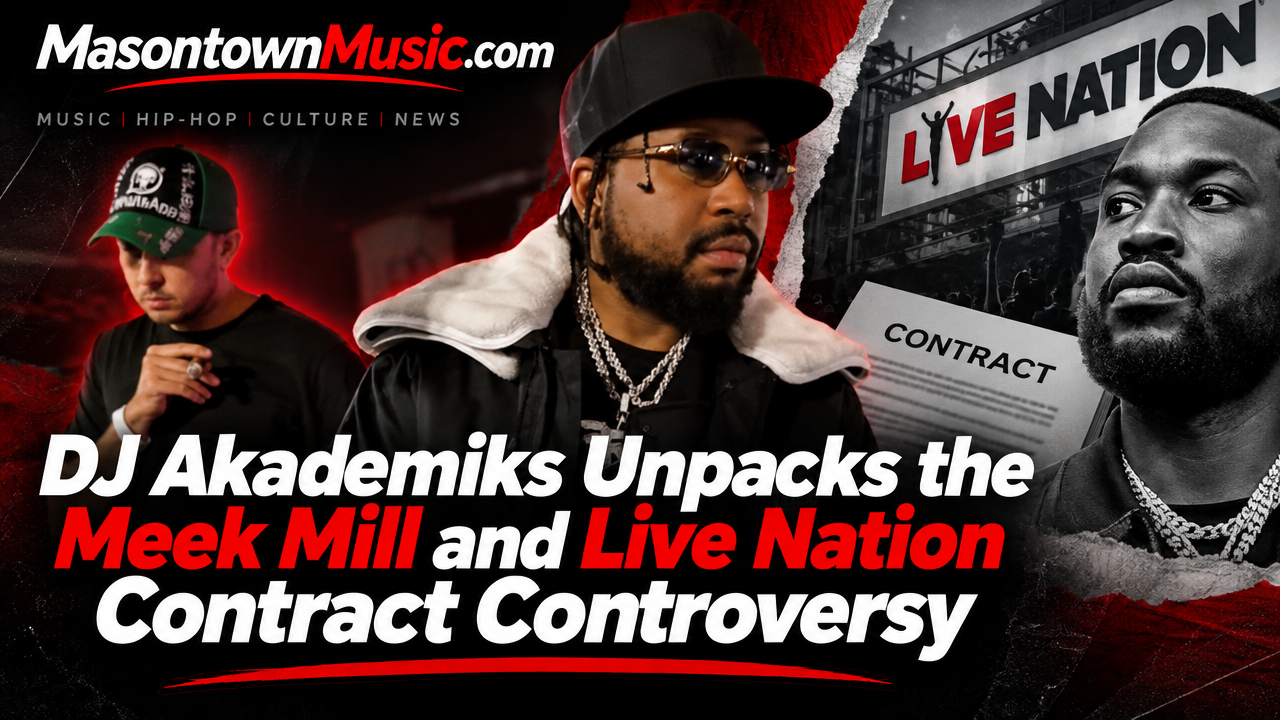
DJ Akademiks recently provided an in-depth explanation of the financial and contractual dynamics between rapper Meek Mill and entertainment giant Live Nation, shedding light on the reasons behind ongoing tensions in their professional relationship. This discussion comes amid Meek Mill’s public complaints alleging that Live Nation is hindering his touring opportunities, a claim that has sparked widespread attention within the music industry and among fans.
Background: The Contractual Deal in the Pandemic Era
According to DJ Akademiks, Live Nation entered into agreements with several artists, including Meek Mill, during the COVID-19 pandemic that involved upfront payments. These advances were intended to secure artists’ participation in multiple future tours. However, the contracts stipulated that artists must complete a predetermined number of performances before receiving additional earnings beyond the initial advance.
This arrangement allowed Live Nation to recoup its investment on the front end, effectively minimizing their financial risk while providing the artists with immediate income during a period when live performances were largely paused.
Meek Mill’s Complaints and Industry Context
Despite the financial relief provided by these advances, Meek Mill has voiced dissatisfaction with how these contractual obligations have affected his career trajectory. He publicly criticized Live Nation for restricting his touring opportunities, contrasting his experience with artists such as A$AP Rocky who have reportedly been allowed to tour large arenas without such limitations.
Meek Mill’s contention that he remains “shelved” while others benefit from live performances contrasts with the contractual realities outlined by DJ Akademiks. This points to a complex balance between contractual commitments and artistic freedom heavyweights face in the live entertainment sector.
The Financial Implications for Artists
The Live Nation contract model exemplifies a broader industry trend where large entertainment companies provide artists with upfront payments in exchange for future touring commitments. While this can offer critical financial support, especially during unpredictable times like the pandemic, it often restricts artists’ autonomy over their performances and earnings.
Artists under such agreements might find their touring schedules controlled by the company to ensure cost recovery, sometimes delaying additional income or limiting opportunities to collaborate or perform outside contract terms.
Recent Milestones in Meek Mill’s Career
Amid discussions about his contract, Meek Mill has continued to maintain a public presence with notable events and projects. For example, he performed at Philadelphia’s Fourth of July concert in 2026 and featured in a new music video cameo with Pennsylvania Governor Josh Shapiro, reflecting his ongoing efforts to engage with fans and the public.
These appearances underscore that while the touring restrictions remain a point of dispute, Meek Mill continues to actively pursue his career within available avenues.
What This Means for the Artist-Company Relationship
This situation highlights the evolving complexities that artists face when negotiating with major entertainment promoters. Upfront advances provide financial security but often come with strings attached that can limit flexibility and control over one’s own career. The Meek Mill and Live Nation case serves as a cautionary tale of the trade-offs involved.
For stakeholders, including artists, promoters, and legal advisors, understanding the full implications of such contracts is crucial to ensure fair and sustainable partnerships.
Looking Ahead
As the live music industry continues to adapt post-pandemic, how such contracts are structured may shift to better balance risk and reward for artists and companies alike. Meek Mill’s public criticism may spur further scrutiny and dialogue on artist rights and contract transparency.
Observers will be watching for how Live Nation and Meek Mill navigate their relationship going forward, and whether this dispute encourages reform in artist-tour promoter agreements.